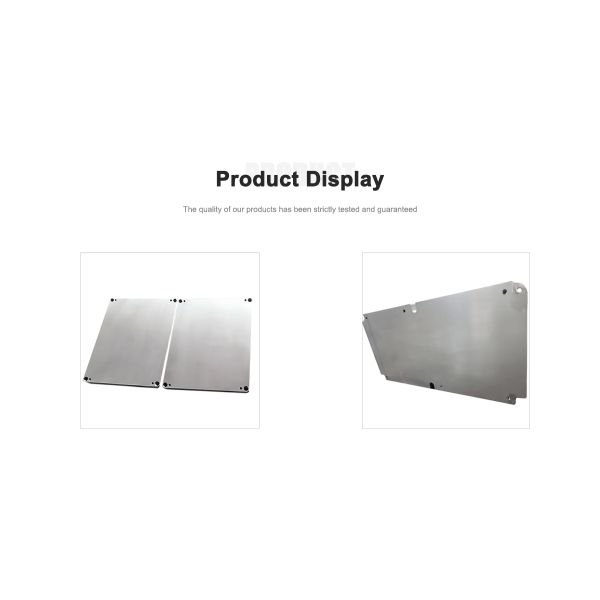
Titanium Alloy Substrate Sheet for Powder Bed Fusion and Laser
Melting Machines
Titanium alloy substrate sheets are critical base materials used in
additive manufacturing systems such as Powder Bed Fusion (PBF) and
Laser Melting machines. These alloys are primarily composed of
titanium combined with aluminum, vanadium, and other elements to
improve strength, oxidation resistance, and thermal stability. They
act as both a platform and a thermal conductor during the 3D
printing process, ensuring adhesion, accuracy, and heat balance
across printing layers.
At DLX, we specialize in high-quality titanium alloy substrate
sheets engineered for consistency, precision, and durability. Each
sheet undergoes strict material inspection and flatness control to
guarantee exceptional performance in demanding additive
manufacturing environments.
| Property | DLX Titanium Alloy Substrate | Standard Titanium Alloy | Stainless Steel Substrate |
|---|
| Main Composition | Ti-6Al-4V (Grade 5) | Ti-6Al-4V | Fe-Cr-Ni |
| Density | 4.43 g/cm³ | 4.43 g/cm³ | 7.9 g/cm³ |
| Melting Point | 1660°C | 1660°C | 1450°C |
| Thermal Conductivity | 6.7 W/m·K | 6.5 W/m·K | 16.3 W/m·K |
| Surface Flatness | ≤0.03 mm | ≤0.05 mm | ≤0.08 mm |
| Tensile Strength | 895 MPa | 860 MPa | 650 MPa |
| Oxidation Resistance | Excellent up to 700°C | Good up to 600°C | Moderate |
| Service Life | Long-term reuse | Limited reuse | Short-term |
DLX titanium alloy substrate sheets are specially treated to ensure
stable performance under repeated heating and cooling cycles. The
optimized microstructure enhances fatigue resistance, making them
ideal for long-term industrial use.
Applications
- Powder Bed Fusion (PBF) Systems: Provides a smooth, stable base for
titanium, Inconel, and cobalt-chrome powders.
- Selective Laser Melting (SLM): Ensures excellent adhesion and
dimensional accuracy during the melting process.
- Aerospace & Defense: Used in structural and engine components for
their high strength-to-weight ratio.
- Medical Implants: Offers biocompatibility and corrosion resistance,
ideal for orthopedic and dental implants.
- Automotive Prototyping: Used in lightweight high-performance
components and precision tooling.
- Research Institutions: Essential for experimental 3D printing
setups and advanced material testing.
Industry Analysis
The global 3D printing metal substrate market has experienced rapid
growth alongside the additive manufacturing industry. With titanium
alloys leading the charge in aerospace, healthcare, and defense,
substrate demand is shifting from traditional stainless steel to
lightweight and thermally stable materials.
As production scales, the focus has moved toward substrate
reusability, surface consistency, and heat management. DLX has
responded by developing titanium alloy sheets with controlled
surface finish and uniform micro-grain distribution. These
improvements reduce warping, improve powder adhesion, and allow
multiple reuse cycles—key to lowering overall manufacturing costs.
Industry trends also highlight a growing preference for custom
substrate dimensions and coated surfaces (such as sandblasted or
anodized finishes) to match specific 3D printing system
requirements. DLX supports full customization, including
tight-tolerance cutting and surface treatments compatible with EOS,
Renishaw, and SLM systems.
Company Advantage – Why Choose DLX
DLX has been a trusted partner in the high-temperature alloy and
additive manufacturing industry for years. Our in-depth material
expertise, precision processing capability, and quality assurance
make us stand out.
- Precision Engineering: Every titanium substrate sheet is processed
with strict thickness and flatness control to ensure compatibility
with all major laser melting systems.
- Advanced Surface Treatment: Custom finishing options (mirror
polish, sandblasting, anodizing) ensure optimal powder adhesion and
thermal uniformity.
- High Repeatability: DLX sheets are designed for multiple build
cycles without distortion, helping customers cut operational costs.
- Material Consistency: All sheets come from certified Ti-6Al-4V
billets, guaranteeing mechanical stability and purity.
- Fast Delivery & Global Supply: We maintain ready-to-ship inventory
and can handle custom orders globally with reliable logistics
support.
- Technical Support: Our engineers provide guidance on substrate
selection, maintenance, and usage optimization for your specific
machine models.
In short, DLX titanium alloy substrates are not just base
plates—they're a foundation for precise, reliable, and efficient 3D
printing results.
About Us
Our 12,000㎡ factory is equipped with complete capabilities for
research, production, testing, and packaging. We strictly adhere to
ISO 9001 standards in our production processes, with an annual
output of 1,200 tons. This ensures that we meet both quantity and
quality demands. Furthermore, all products undergo rigorous
simulated environment testing including high temperature, high
pressure, and corrosion tests before being dispatched, ensuring
they meet customer specifications.
For all our clients, we offer timely and multilingual after-sales
support and technical consulting, helping you resolve any issues
swiftly and efficiently.
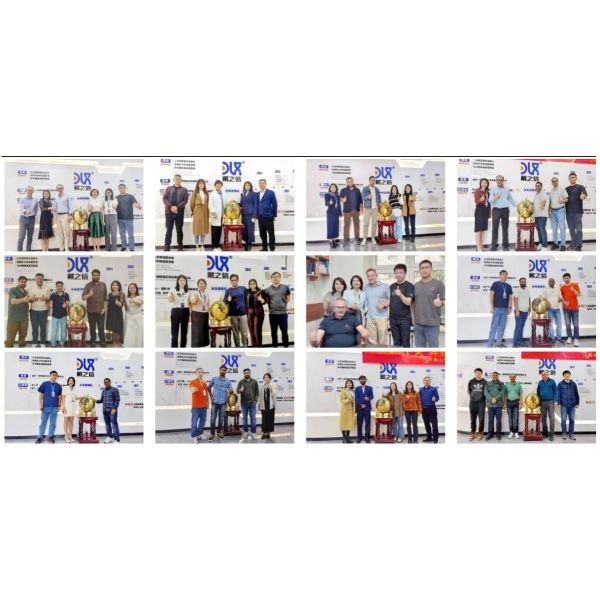
Client Visits
Building Stronger Partnerships
We support all kinds of testing:
FAQs
1. What is a titanium alloy substrate sheet used for?
It's a reusable base plate that supports the metal powder during
the 3D printing process in machines like Powder Bed Fusion or Laser
Melting systems.
2. Why choose titanium instead of stainless steel?
Titanium is lighter, more resistant to oxidation, and better suited
for high-temperature cycles, especially for aerospace and medical
printing applications.
3. Can DLX substrate sheets be reused?
Yes. Our titanium alloy substrates can withstand multiple
print-removal cycles with minimal surface deformation, extending
overall lifespan.
4. What grades of titanium does DLX offer?
We primarily offer Ti-6Al-4V (Grade 5) and Ti-6Al-4V ELI (Grade
23), but custom grades can be produced upon request.
5. What surface finish options are available?
DLX provides polished, sandblasted, and anodized finishes depending
on powder type and printing precision requirements.
6. How does the substrate affect printing quality?
Surface flatness and thermal conductivity play a key role in layer
adhesion and dimensional accuracy. DLX's precision finishing
ensures stable results.
7. Are DLX substrates compatible with all 3D printers?
Yes. We can customize the size, thickness, and mounting holes for
compatibility with EOS, Renishaw, SLM, and other major printer
brands.
8. What packaging and shipping standards do you follow?
Each sheet is vacuum-packed with moisture barriers and shock
protection, ensuring damage-free delivery worldwide.
Market Outlook
As additive manufacturing continues to evolve, titanium alloy
substrates are becoming the preferred choice for high-end
applications. The transition toward sustainable and reusable base
materials aligns with the growing push for cost-efficient 3D
printing production lines.
DLX's investment in titanium alloy substrate research supports
these advancements. Our focus remains on improving substrate
surface control, oxidation resistance, and mechanical strength,
ensuring that every customer—from small-scale researchers to
large-scale production facilities—receives reliable,
performance-driven solutions.
Titanium alloy substrate sheets are a critical yet often overlooked
component in additive manufacturing. At DLX, we view them as a
strategic link between raw powder and finished product quality.
With our advanced production control, material science expertise,
and customer-focused approach, we help clients achieve consistent
3D printing success—build after build.
Our titanium alloy substrate sheets deliver what modern
manufacturing demands: durability, precision, and performance that
lasts.